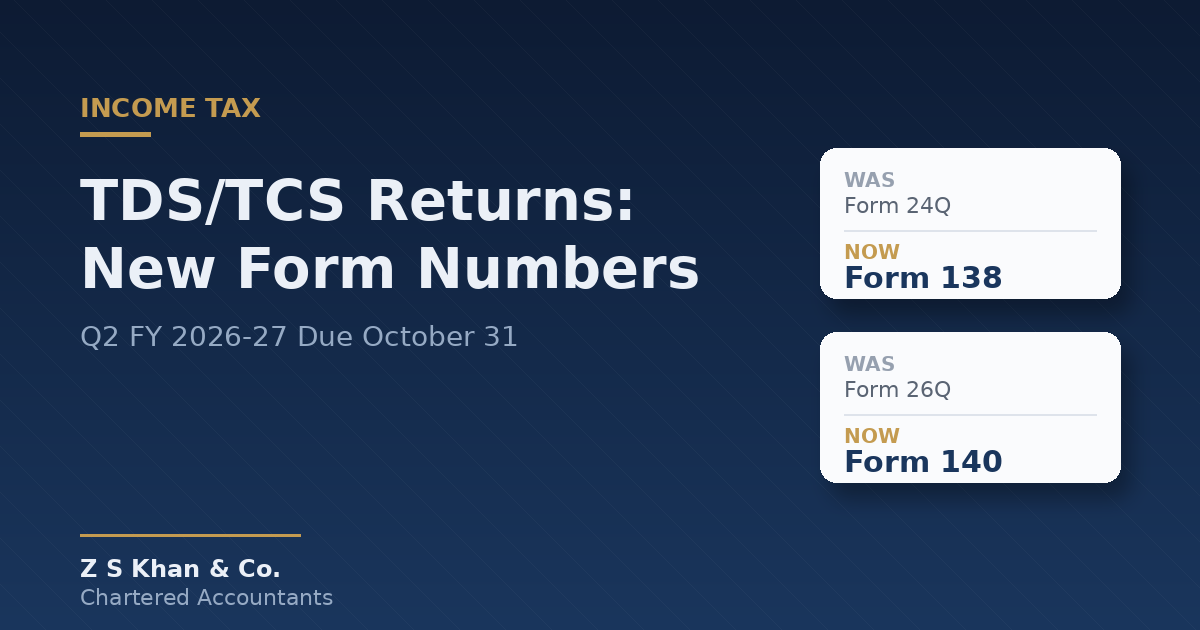
The Deadline: October 31, 2026
If you deducted or collected tax at source between July and September 2026 (Q2 of FY 2026-27), your quarterly TDS/TCS return is due by October 31, 2026. This is the standard quarterly rule that’s always applied — what’s different this year is the paperwork itself.
Your Forms Have New Numbers This Year
With the new Income-tax Act, 2025 having taken effect from April 1, 2026, the familiar TDS and TCS return forms have been renumbered as part of the Act’s broader restructuring of section and form references. If you’ve filed TDS returns for years under the old form names, it’s worth taking a moment to re-check which form you’re actually filing this quarter.
Mapping the Old Forms to the New
Here’s how the renumbering lines up: Form 24Q (TDS on salary payments) is now Form 138; Form 26Q (TDS on payments other than salary, to residents) is now Form 140; Form 27Q (TDS on payments to non-residents) is now Form 143; and Form 27EQ (TCS returns) is now Form 144. The underlying reporting requirements — deductee details, challan details, amounts deducted and deposited — remain substantially the same; it’s the form identity and the underlying section references that have changed.
What Hasn’t Changed
The quarterly filing rhythm is unchanged: returns are still due by the last day of the month following the end of each quarter, which is why the Q2 (July-September) return falls due on October 31. The requirement to first deposit the TDS/TCS amount with the government before filing the return also continues as before, and the TRACES portal remains the platform for generating and downloading TDS certificates once returns are processed.
Common Filing Mistakes to Avoid This Quarter
The most common error this cycle is simply using the old form name or an outdated template out of habit — double-check that your return utility or software has been updated to generate the correct new form. Beyond that, the usual checks still apply: verify deductee PANs are valid and correctly entered, reconcile the TDS/TCS deposited in challans against what’s being reported in the return, and make sure the correct section codes are quoted against each deduction.
Penalties for Missing the Deadline
Late filing of a TDS/TCS return attracts a fee under Section 234E of ₹200 per day of delay (capped at the TDS/TCS amount for that return), in addition to possible interest on any delayed deposit of tax and a separate penalty under Section 271H for continued non-compliance. Given the new form numbers add a small extra step to getting this right, it’s worth starting your Q2 return process a little earlier than usual this quarter.
What We Recommend
If your payroll or accounting software hasn’t yet been updated to reflect the new form numbers, check with your software vendor before you sit down to file. For businesses with multiple deductee categories (salary, non-salary residents, non-residents, and TCS), it’s worth confirming each return is being filed on the correct corresponding new form before the October 31 deadline.
This post is for general informational purposes and does not constitute tax advice. Please consult us directly for guidance specific to your situation.